Search Me

Tuesday, January 14, 2014

LY #89 Burking

Today I taught Burke's Pentad for the first time ever.  I used material lifted from Rhetorica.net for an overview and then lifted a picture from elsewhere on the web as an illustration.  After that, I gave a VERY brief overview of how the concepts of Act, Scene, Agent, Agency and Purpose might be applied to an analysis of  “The Man Your Man Could Smell Like”
Act:  Showing of a television commercial
Scene
:  The date/social setting of the commercial (Super Bowl 2010, then Youtube)

Agent
: Portland ad agency Wieden+Kennedy

Agency
:  Film (actor choice, imagery, all aspects of film language, music, etc etc)
Purpose:  To sell Old Spice but also to increase fame of ad agency. 
  
(As a bonus, I talked about this particular advert as a "meme")

Once we start reading Understanding Comics I'll give them a homework assignment of analyzing a particular comic or comic strip.

When I was leaving Utah I would have been surprised if anyone had told me that I would probably not talk about Kenneth Burke in a classroom again for another 25 years.  The main reason, of course, is that the work of this wonderful scholar simply hasn't been appropriate for most of what I do.

But it was Burke's Rhetoric of Motives that actually got me interested in going on in communication study.  We had to read some of it in a rhetoric course at Idaho State.  The prof in the course didn't like the old man but thought we should have a taste.  When I read Burke I felt as though he was talking from inside of my head.  He saw almost all actions as persuasive.  I'd never read that point of view before.  I'd always heard that persuasion was a conscious act of verbal argument.  But my experience of persuasion was that people and text were always pushing me somewhere or calling me to be something.  Burke's concept of "identification" helped me to understand how texts called to me.

While I was at Utah I took an entire quarter in Burke from the brilliant Christine Oravec.   The introductory text we used in the weed class, Introduction to Human Communication, quoted Burke's definition of the human. 
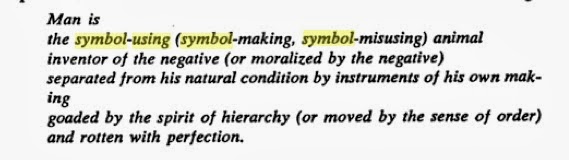
http://books.google.com/books?id=HXF3HMi1zQ4C&q=symbol+using#v=snippet&q=symbol%20using&f=false
A page from Language as Symbolic Action (p. 16) by Kenneth Burke, out there in Google bookland.

But after Utah, I found little reason to use Burke's ideas in my freshman and sophomore classrooms.  But just this once, before I leave, I thought I'd give it a go.   

I will write more about the wonders of Kenneth Burke in a later post.

Monday, January 13, 2014

LY #88 An Unfortunate Intrusion of Reality at Downton

http://static2.stuff.co.nz/1381201999/525/9257525.jpg
Dame Kiri Te Kanawa as Nellie Melba


This blog entry contains 4th season spoilers for Downton Abbey.

I watch Downton Abbey for the costumes, the soap operatics, and to have the imperial past cleaned up, as Maureen Dowd has noted, and reconstructed before my eyes.  I do not watch it to have my own PTSD triggered.  Sadly, last night's episode did just that.

The cleaning of history was discontinued last night in an ugly and unfortunate manner.  While the oppression of women is certainly historically accurate, the intrusion of real-life ugliness into the fantasy of Downton was not welcome.  The climactic scene echoed other classics of crosscutting, like the christening and gang-war blood bath in The Godfather, discussed here by Oliver Gayken as an example of parallel editing.  In Downton, a house concert by the famous (and nonfictional) opera singer Nellie Melba (played by real life opera star Kiri Te Kanawa) is cross cut with the violent rape downstairs of ladies maid Anna.  The happy or bored faces of the house guests and staff, all upstairs, is contrasted with the horror of the actions taken by Lord Gillingham’s charming valet, Mr. Green.

I was very disturbed by this scene as were many others.  When the episode was broadcast in Britain in the fall, it created an uproar, dividing many fans.  The Mirror ran a collection of tweets and posts, including this one from a viewer named Zoe: “Having a rape on Downton is like having a murder on Teletubbies”"   The Express also reported the Abbey fandom's attacks on Julian Fellowes.  The Telegraph's Glenda Cooper wrote, "So when the scene finally occurred - the rape of lady’s maid Anna Bates by a visiting valet - it came out of nowhere. I sat up, and gasped in horror.  No - not Anna! Not one of the best-loved characters (and genuine acting talent) treated this way? And - surely not using rape as Sunday night entertainment in order to spice up a flagging franchise and eclipse the return of Homeland?"


All these responses occurred last fall while I was teaching and not thinking about Downton after my summer of catching up to the show.  Then, after last night's stateside broadcast, there was more outrage.   June Thomas, at Slate.com, noted that the rape is just one more sadistic act against a female character on a show that depends on the suffering of women for its drama.  Tom McCarthy, at The Guardian, said  "What befalls Anna is more brutal, as presented, than anything the series has yet seen, and that includes literal trench warfare."  (Mr. McCarthy also recognized the Coppola-esque cross cutting)

A story in today's New York Times quotes Katherine Hull, a spokeswoman for the Rape, Abuse & Incest National Network,  saying, “Because this crime can be so isolating, for many viewers who may have a strong attachment to a character, to see them go through an experience that they’ve been through is incredibly powerful.”

Yeah, it was powerful for me in an unfortunate way.  Although my own rape occurred over 40 years ago, it still has some inner psychological potency, it's panic and fear revived at times when I see scenes of rape or even simple scene of women in jeopardy.   The story line of Anna being slugged and battered brought back memories of the two men who kidnapped me for a few hours one night in 1972, took me into the hills above Pocatello, and did what they did while threatening me with death.   After a week of shock (during which I pretty much drifted through my life and flunked all my midterms) I recovered, eventually coming to understand that I if I ever found out who my attackers were I would have the will to kill them.  Fortunately, sometime in my late forties, my mind and heart went the other direction and I realized that if I ever found out who my attackers were I would have the will to forgive them.

I thought about all that last night as I was not sleeping after the violent episode.  So, in an attempt to calm myself as I've been writing this post I've looked into the future by looking at the past.  I've just read the re-cap of the season 4 finale of Downton and found out that Mr. Green perishes (off stage) "in the street" in London and there's talk that Bates pushed him (though some believe that Anna herself did the deed, an ending I would prefer).  So, I may continue watching.

Saturday, January 11, 2014

LY #87 Making Conversation

 I forgot to hit the "publish" button on the following post last night.

I was talking about my blog this afternoon when my doctor was examining my "down there."  It made me think about how professionals will sometimes talk to you not because they are interested in  conversation but because they want to remove your focus from what they are doing.  In recent years this practice has been most noticeable to me when my chiropractor cracks my neck or my esthetician rips hot wax off my inner thigh.

I first noticed this particular behavior, however, when I was in grade school.  In those days some doctors still made house calls.  I remember being very sick with a terrible ear ache.  The doctor came to the house and, as Mom looked on, had me reverse position on my bed and lie with my head on an old pillow case without a pillow.  Then he started talking to me about what I was doing in school as he turned my head to the left.  At that moment I was thinking, "Why are we talking about school when I know you're about to do something terrible to me?"  And he did.  He poured something hot and purple into my ear.  I know it was purple because he poured enough in that it ran over my neck and onto the old pillow case.

What I learned from this experience was that doctors are tricky.  What I learn by looking back on it is that very early on in my life I was observing the communicative behaviors of others and questioning their purpose and effects.  Was I born a communicologist or did I become one because I observed the trickery of trusted adults and questioned it?

Inquiring minds want to know.

Friday, January 10, 2014

LY #86 More about Tweeting

My friend Stacey Donohue is now at the MLA in Chicago, shivering and tweeting.  I don't tweet, myself, though I recognize the value of that channel of communication.  Stacey says it's a good way to share ideas quickly, keep informed, and keep others informed; that it's useful if one has a cohort.


I feel anxious at the thought of having to share ideas quickly and of "keeping up" with the New and the Now.  I don't want to be "on" 24/7.  That's too much like the journalistic life I left behind at age 23.  And I don't really have a "cohort" with whom I want to be in instant and/or constant communication.  I have perhaps a bit in common with the cat who walked by himself.

I did make an attempt, during November's NCA meeting in Washington (which I did not attend) to find some conference tweeting found little to read.  This is largely a matter of my lack of understanding of how hashtags function but may also have been a shortage of tweets about the actual conference.  I searched for #NCA when I should probably have been searching for hashtags specific to particular individuals or divisions or even panels -- but that seemed like WAY too much work.  I did find a few tweets from individuals excited to be there but nothing that gave me insight into what people thought of the panels they were attending. 

And, frankly, I didn't look that hard.  I'm pretty lazy about performing new and difficult behaviors for which I see no reward.

Painting by Sam Hanson
If my post retirement plans fall into place, however, there will be some rewards for tweeting.  I will need to learn this new communicative behavior in order to market my self-published books.  Self-publishing requires self-promotion.  And all the "experts" today tell us that self-promotion requires social media. learn  So, once I've finished with my first summer project, the edited collection of my Dad's painting of nudes, I'll be reading more advice about self-publishing and then getting that electronic book up at BooksurgeCreatespace, or LuluDad's memoirs are already available at the latter.  Sadly, in the writings he left behind he said nothing about his post-retirement work as an artist.  I want to fill in that missing piece while leaving behind a little piece of my mind as well.  And that may, indeed, take a few tweets.


Wednesday, January 8, 2014

LY# 85 So Why Do You Teach Speech?


I probably should have responded with the deep thought that "We teach what we need to learn."  


The question a student asked yesterday was, "So if you're so nervous about public speaking why do you teach it?"
doctoral gown
PhD Apparel
Instead I was honest.  I said that I'd wanted to work as a teacher rather than a researcher and if you make that choice in the field of communication, you're pretty much choosing to teach the basic courses:  public speaking,  interpersonal communication and small group.  Kinda like folks who get PhDs in literature often wind up teaching composition if they get work in a school focused on instruction. 

Public speaking was the first communication course I ever taught during my one semester of teaching at Idaho State University.  I went on to teach it as a graduate student at the University of Utah along with a few more intellectual courses.  But I never took graduate level courses in any of the three basic courses.  I had no 500 - 700 level courses in Public Speaking, Interpersonal or Small Group Communication at either ISU or the U of U.  The focus of my graduate work was on rhetorical, media, and communication theory along with American and cultural Studies. 

In the past 25 years, the number of classes I've taught at COCC in my areas of expertise can be counted on the the digits of two hands: five or six sections of Introduction to Motion Pictures, one section of Noir Film and Fiction, and my two new classes, each taught just once:  Introduction to the Rhetoric of Film and Introduction to Visual Rhetoric.  The last one I am teaching for the first and last time this quarter.  I am very excited that I'll be able to talk about semiotics again next week!

But what does this story prove?  

I might say something about the questionable link between doctorates and undergraduate teaching or that skills training doesn't require advanced learning.  Instead I'll just say that I think it proved I was diddly darn lucky to have lived this wonderful career.


LY #84: Coward-ly Comments or Another Thing I'll Miss About Teaching

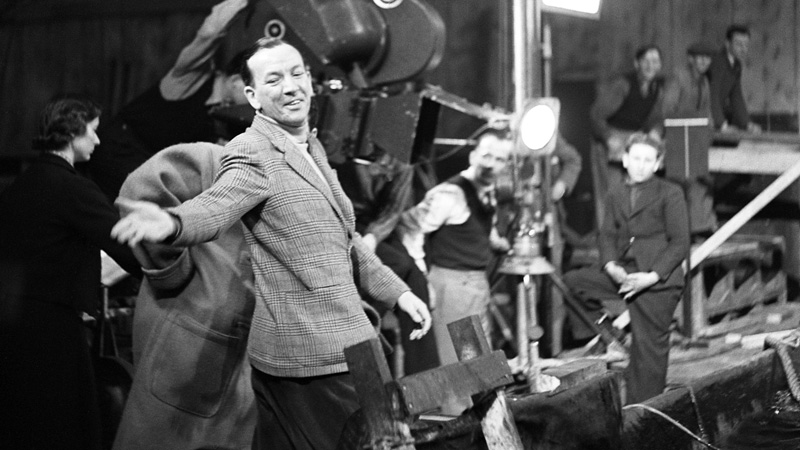
Noel Coward (Criterion Collection)
The first day of my last Winter Quarter of teaching was just like every other.  It started at 5:00 a.m. with unhappy sinuses and a bad back letting me know they weren't rested from my night of fitful sleep.  In other words, I woke miserable, tired, and feeling every one of my sixty years.

As I walked the dog three hours later, I softly sang a song by Noel Coward:  "Why Must the Show Go On."  In this lively ditty, the late, great 20th Century master of English theatrical wit wonders why showfolk insist on going on stage when they are suffering.

"Why stifle a sob when doing your job
When, if you'd use your head,
You'd go out and grab
A comfortable cab,
And go right home to bed?"


But later in the day, when I met my three classes, I knew at least one answer to that question:  because performance can be a curative.

For me, the first day of of classes is an event that masks and overturns almost any unhappiness and discomfort.  Because I have communication apprehension, I always push through my anxiety about meeting new students by entering each new class "big."  I'm loud, move a lot, and have a routine that strives for humor.  Sometimes, when I'm lucky, I have classes that respond with smiles and laughter.  This happened yesterday in my late afternoon public speaking class.  I got laughs all the way through class -- which, of course, stimulated a lot of goofy side comments from me which resulted in more laughter from them.

Classrooms, like every f2f communication situation, are reciprocal, self-regulating systems.  I like to have fun and I think that my interest in fun is usually (not always) appreciated by my students, especially in the fear-inducing setting of the public communication classroom.

Yesterday's public speaking class began with the roll call followed by my swift decision about where to cut off the long wait list.  I usually allow 3 extra people into the class with the hopes that at least three folks will drop out after the first two speeches.  It's important to keep the class at the required number of students because of the time needed for the student speeches themselves throughout the quarter.  I explained this to the students before calling the names on the waitlist.  After three names I made the cutoff.  I said told the six folks who did not make the cut, "Sorry, good-bye, and thanks for playing our game.  Better luck next quarter."  This got a laugh yesterday from those remaining in the class.

After that decision, I always play a game I call Toss.  Students tossed two Koosh balls and a soft dog ball back and forth.  They are required to toss over the head of at least one colleague and not allow the ball to drop to the floor.  Laughter ensues during the activity.  After I stopped the game and have them turn in the tossed objects, I tell them.  "I do have a reason for having you play this game.  First -- because it amuses me."  This got a huge laugh yesterday.  Then I went on to talk about the pedagogical reason -- that success in Toss requires skills and attitudes that are shared with success in public speaking. 

I had two other classes yesterday (my Tuesdays end at 8:25 after the completion of my once-a-week interpersonal communication class).  While neither was as lively as the public speaking class, each had their own positive energy.  If performance were the only part of teaching, if I could be like the peripatetic philosophers and not worry about grading these people with whom I'm in relationship, I might not be retiring this spring.


Monday, January 6, 2014

LY #83: Social Media and Freedom of Speech or Fired, Part Deux

Our college President, Jim Middleton, has always been friendly to me.  I think he's a nice guy.  During the time that I was a department chair he supported me in at least two difficult situations, one in which I made a correct judgement call and was attacked for it and a second in which my decisions were poor but accepted as a not unusual error.  

I would not, therefore, be like the faculty members at College of Marin who "submitted a resolution with a laundry list of complaints about Middleton" according to a report by Nancy Isles Nation, in the Marin Independent Journal (March 28, 2003 Marin section).  These complaints involved harshly stated criticisms of financial decision making at a time of budget meltdown (which is just about any old time in California since Howard Jarvis rocked the tax-boat in 1978).  Five months later, a report by an independent firm called ThoughtBridge found that the problems at the College of Marin predated the coming Middleton as they noted that  "the institution lacks a common vision, leadership, communication and a process to connect parts of the institution as one, cohesive organization." (Marin Independent Journal, August 11, 2003)   The consultants knew that it takes a village to mess up a village.  It's never appropriate to find one person responsible for all the good or ill that occurs within a large organization.

So as people talk about the current dysfunction and chaos in COCC's management, they are wrong if they waggle their pointer fingers at any one individual or cause.  There's guilt to go around, including some settling with those of us oldsters who got tired of it and pulled back into our shells.

But that's not what I wanted to talk about.  I offer the information above merely as a pretext for
wondering, if I were in Kansas right now and writing about a college president, could I be terminated? With prejudice?  According to the new social media policy, my tenure status would not be all that potent a shield if it looked like I was doing anything that impaired the ability of my leader to lead or had a "detrimental impact on close working relationships."  Does what I'm saying impact the image of the college?  Does it hurt the bottom line?

Well, considering that on a good day ten people read this palaver I provide, probably not.  BUT, an argument could be made . . . If I lived in Kansas.

Fortunately, I don't.  Nor do I think it's the job of every worker to be nice and polite about his or her workplace in public utterances, not while the First Amendment is in operation.  And while the business of America may be business, the business of its academic institutions should be something else -- the creation of citizens, the training of workers and/or the creation of new knowledge, depending on the vision and goals of the particular school. 


Below find the Full Text of the new Social Media policy of the Kansas Board of Regents:

The chief executive officer of a state university has the authority to suspend, dismiss or terminate from employment any faculty or staff member who makes improper use of social media.  "Social media" means any facility for online publication and commentary, including but not limited to blogs, wikis, and social networking sites such as Facebook, LinkedIn, Twitter, Flickr, and YouTube.  "Improper use of social media" means making a communication through social media that:

i.  directly incites violence or other immediate breach of the peace;

ii.  when made pursuant to (i.e. in furtherance of) the employee's official duties, is contrary to the best interest of the university;

iii.  discloses without authority any confidential student information, protected health care information, personnel records, personal financial information, or confidential research data; or
iv.  subject to the balancing analysis required by the following paragraph, impairs discipline by superiors or harmony among co-workers, has a detrimental impact on close working relationships for which personal loyalty and confidence are necessary, impedes the performance of the speaker's official duties, interferes with the regular operation of the university, or otherwise adversely affects the university's ability to efficiently provide services.

In determining whether the employee's communication constitutes an improper use of social media under paragraph (iv), the chief executive officer shall balance the interest of the university in promoting the efficiency of the public services it performs through its employees against the employee's right as a citizen to speak on matters of public concern, and may consider the employee's position within the university and whether the employee used or publicized the university name, brands, website, official title or school/department/college or otherwise created the appearance of the communication being endorsed, approved or connected to the university in a manner that discredits the university.  The chief executive officer may also consider whether the communication was made during the employee's working hours or the communication was transmitted utilizing university systems or equipment.  This policy on improper use of social media shall apply prospectively from its date of adoption by the Kansas Board of Regents.